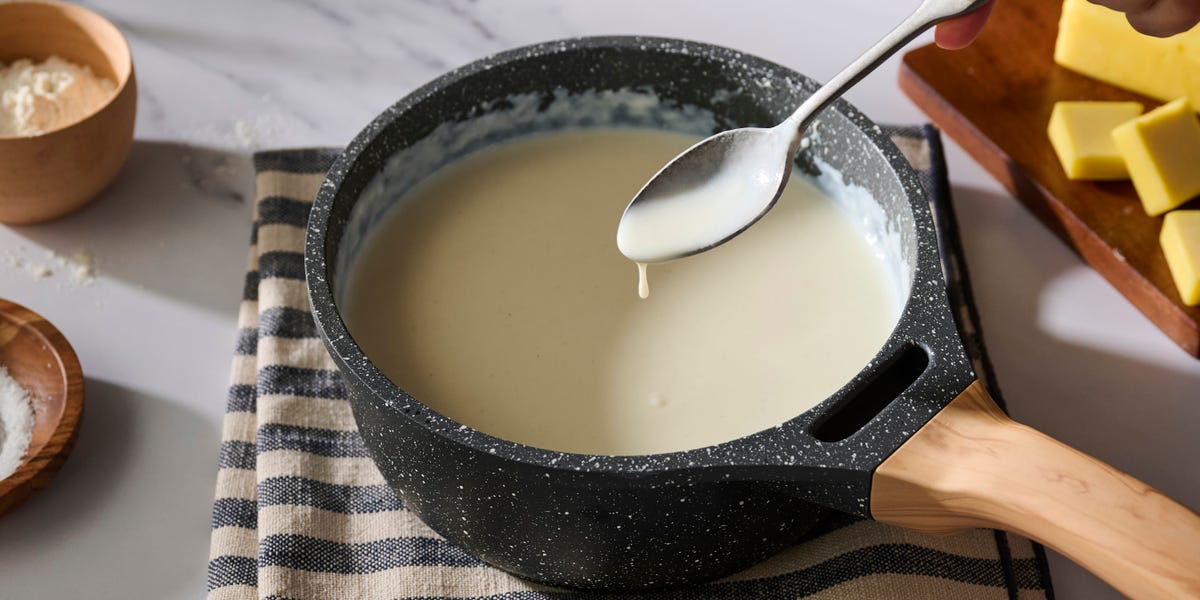
The Versatile Béchamel: Crafting Your Creamy White Mother Sauce
The culinary world is rich with foundational recipes, and few are as celebrated and versatile as Béchamel. Often referred to as a "mother sauce" in classical French cuisine, mastering this creamy white sauce unlocks a universe of delicious possibilities in your kitchen. If you’ve ever wondered how to make bechamel sauce white sauce from scratch, you're in the right place. Far from being intimidating, Béchamel is a testament to the magic that can be created with just a few simple ingredients and a little technique. It’s a basic building block that, once perfected, will become an indispensable tool in your cooking arsenal, transforming everyday dishes into gourmet delights.Why Master Béchamel? The Culinary Cornerstone
Imagine a world where your lasagna boasts layers of silken, rich sauce, your gratins achieve unparalleled creaminess, and your mac and cheese transcends childhood nostalgia into sophisticated comfort food. This is the world that opens up when you learn to craft a perfect Béchamel. Its remarkable adaptability is what truly sets it apart. Originating in the French court during the 16th century, Béchamel swiftly became a classic, forming the foundation for countless other sauces. While convenient pre-made versions exist, there's an undeniable satisfaction and superior flavor profile that comes from a homemade sauce. The fresh, unadulterated taste and silky texture of a properly prepared Béchamel simply cannot be replicated by a packet. Beyond its direct use in dishes like croque monsieur, creamed spinach, or savory soufflés, Béchamel serves as the launchpad for an array of delightful derivatives:- Mornay Sauce: Stir in grated cheese (Gruyère, Cheddar, Parmesan) for the ultimate cheese sauce, perfect for pasta, vegetables, or an elevated mac and cheese.
- Mushroom Sauce: Sautéed mushrooms folded into Béchamel create a hearty, earthy topping for steaks or poultry.
- Curry Sauce: A pinch of curry powder and other aromatic spices transforms it into a mild, creamy curry base.
- Soubise Sauce: Infuse it with sautéed onions or other aromatics like celery for a deeper, more complex flavor profile.
- Herb Sauces: Freshly chopped herbs like chives, parsley, or dill can add a vibrant, aromatic twist.
The Trinity of Taste: Essential Ingredients for Your White Sauce
One of the most appealing aspects of Béchamel is its simplicity. You need just three core ingredients, readily available in any kitchen, to create this delicious, creamy sauce. Each plays a crucial role in achieving the desired texture and flavor.1. Unsalted Butter: The Flavorful Fat
Butter forms the fat component of our roux, which is the thickening agent for the sauce. Using unsalted butter is key, as it gives you complete control over the final seasoning of your Béchamel. It imparts a rich, comforting flavor that is integral to the sauce's character. While other fats can technically be used, butter is traditional and highly recommended for its superior taste.
2. All-Purpose Flour: The Binding Factor
Regular all-purpose flour is the starch that binds the fat and liquid together, creating the sauce's characteristic thickness. When combined with butter and cooked, it forms the roux. The starch molecules in the flour swell when heated in liquid, effectively thickening the sauce. The ratio of flour to butter is crucial for achieving the correct consistency.
3. Whole Milk (or Cream): The Liquid Foundation
The choice of liquid profoundly impacts the final richness and creaminess of your Béchamel. Whole milk is highly recommended for the tastiest and most luxurious end result. Its fat content contributes significantly to the sauce's silky texture. While skimmed or semi-skimmed milk can technically be used, the sauce will lack the desired body and creamy mouthfeel. For an exceptionally rich and decadent Béchamel, you can even substitute a portion or all of the milk with heavy cream.
Mastering the Method: A Step-by-Step Guide to Crafting Béchamel
Now that we understand the ingredients, let's dive into the practical steps for how to make bechamel sauce white sauce. This process, while simple, benefits from attention to detail.Step 1: Gently Melt the Butter
In a small to medium saucepan, melt your unsalted butter over medium-low heat. The key here is to go slowly and prevent the butter from browning. We're aiming for a classic "white sauce," so any browned butter will alter the color and flavor of the final product. Just let it melt until it's liquid and shimmering.
Step 2: Create Your White Roux
Once the butter is fully melted, it's time to add the flour. The golden rule for a Béchamel roux is equal parts butter and flour by weight. For example, if you used 50 grams (approximately 3.5 tablespoons) of butter, you'll use 50 grams (approximately 6-7 tablespoons, depending on how packed it is) of all-purpose flour. Sprinkle the flour over the melted butter and immediately begin to stir vigorously with a wooden spoon or a whisk. The mixture will quickly thicken into a paste. This paste is your "white roux."
Step 3: Cook the Roux for Flavor
Continue stirring the roux for about one to two minutes over the same medium-low heat. This crucial step cooks out the raw flour taste, which can otherwise leave an unpleasant chalky flavor in your sauce. The roux should remain pale in color – you're not trying to brown it, just cook it sufficiently to enhance its flavor and ensure proper thickening later. Keep stirring constantly to prevent it from sticking or burning.
Step 4: Gradually Incorporate the Milk
This is arguably the most critical step to achieving a smooth, lump-free Béchamel. Remove the saucepan from the heat briefly. Begin by adding a small splash of your whole milk (about ¼ to ½ cup at a time) to the roux. Whisk vigorously and continuously until the milk is fully incorporated and the mixture is smooth and thick again. This initial shock helps prevent lumps from forming. Once smooth, return the pan to the heat and repeat the process: add another splash of milk, whisk until smooth and thickened, then add more. Continue this gradual addition, stirring constantly, until all the milk has been incorporated and you reach your desired consistency. You'll feel the sauce thicken with each addition.
Pro Tip: For an extra measure against lumps, ensure your milk is at room temperature or slightly warmed before adding it to the hot roux. While not strictly necessary if you add slowly and whisk well, it can make the process even smoother.
Step 5: Simmer and Season to Perfection
Once all the milk is incorporated and the sauce has reached a gentle simmer, continue to cook and whisk for another 5-10 minutes. This allows the sauce to fully thicken and for the flavors to meld. The consistency is a matter of preference: thinner for soups, medium for gratins, and thicker for croquettes or as a base for hearty sauces. Season generously with salt and white pepper to taste. A classic touch for Béchamel is a pinch of freshly grated nutmeg, which adds a subtle warmth and aroma that perfectly complements the creamy base.
If you're looking for an even quicker start to perfecting this classic, check out Perfect Béchamel: Simple Steps for a Classic 3-Ingredient White Sauce for a streamlined approach.
Beyond the Basics: Transforming Your Versatile White Sauce
Once you've mastered the technique for how to make bechamel sauce white sauce, you've unlocked a culinary superpower. The beauty of this "mother sauce" lies in its incredible adaptability. Don't be afraid to experiment and personalize your Béchamel. For a richer depth of flavor, consider infusing your milk before adding it to the roux. Gently heat the milk with aromatics like a bay leaf, a few peppercorns, and half an onion studded with cloves (known as oignon piqué). Let it simmer for 10-15 minutes, then strain out the aromatics before using the infused milk in your Béchamel. This adds a subtle, complex background note that truly elevates the sauce. Think about how you can use your freshly made Béchamel tonight:- As the creamy binder for a classic homemade lasagna or moussaka.
- Whisked with cheddar cheese for the ultimate mac and cheese.
- Poured over blanched vegetables like cauliflower or broccoli, then baked into a gratin.
- As the base for a creamy chicken pot pie filling.
- Folded into scrambled eggs for an incredibly rich breakfast.
